Have you ever lost sleep wondering how you would pay your bills if your income suddenly dropped? Or found yourself facing an unexpected car repair or a medical situation that demanded a large, sudden expense? The feeling of vulnerability these situations bring can be paralyzing.
But what if there were a way to protect yourself against these unforeseen events and guarantee your peace of mind?
That way exists, and it is called an Emergency Fund. This is not an article about getting rich overnight. It is about building the foundation — the solid bedrock upon which your entire financial life will be constructed. If you want to take control of your money and sleep more soundly, keep reading. This is the definitive guide to taking the first and most important step.
What Is an Emergency Fund and Why You NEED One?
Imagine a soft cushion to absorb a fall. The emergency fund is exactly that: a "financial cushion." It is money set aside exclusively to cover urgent and unexpected expenses.
Think of it as your car insurance or your family's health plan. You keep them hoping you will never need to use them, but if the unexpected happens, they save you from a massive loss. The emergency fund works the same way for your financial health.
The most common emergencies include:
- Job loss or a drastic reduction in income.
- Medical or dental emergencies not covered by insurance.
- Urgent home repairs (a burst pipe, a broken appliance).
- An indispensable mechanical repair on your car.
- The need for a last-minute trip due to family reasons.
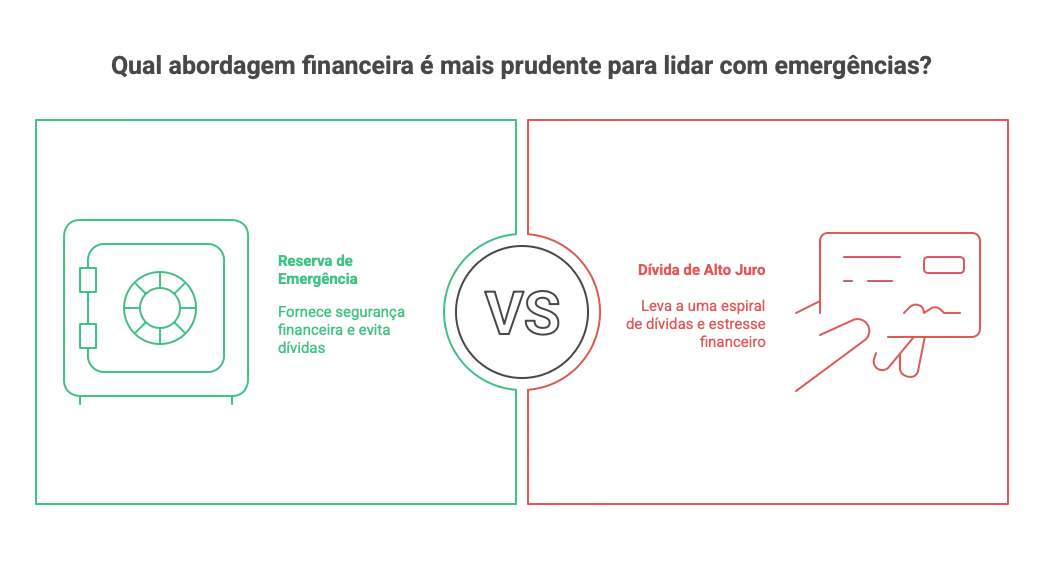
Without a fund, what is the alternative? Usually, it is a high-interest credit card, an overdraft, or a personal loan. In other words, debt with the highest interest rates on the market — turning a $2,000 problem into a $5,000 snowball in no time.
“Having an emergency fund is your insurance policy against bad debt. It is what separates a scare from a financial catastrophe.”
How Much Do I Need to Save? The 3-to-12-Month Calculation
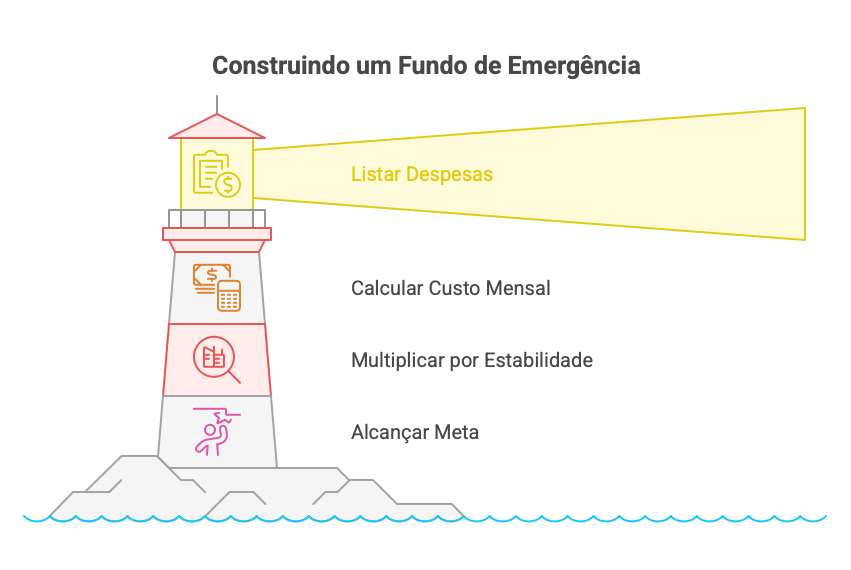
The rule is simple: your fund should cover 3 to 12 months of your essential living costs. Not 6 months of your salary, but of your fixed and indispensable expenses.
To calculate, follow these steps:
- List your essential monthly expenses: Grab a piece of paper or a spreadsheet and write
down everything you need to pay to live for one month. Be honest!
- Housing (rent or mortgage, condo fees, property taxes)
- Utilities (electricity, water, internet, gas, phone)
- Food (grocery store, fresh market)
- Transportation (fuel, monthly pass, ride-sharing)
- Health (health insurance, ongoing medications)
- Exclude non-essential expenses like streaming, restaurants, shopping, etc.
- Add it all up: The result is your monthly cost of living. For example: $3,000.
- Multiply by your stability factor:
- Government employees or those with high job stability: The ideal is to have at least 3 to 6 months in reserve.
- Full-time employees with an employment contract: The recommendation is 6 to 9 months.
- Freelancers, self-employed, and entrepreneurs: Since income is variable, security needs to be greater. Aim for 9 to 12 months.
Do not be scared by the final amount. Remember that no one builds this overnight. The important thing is to know your goal and start.
Where to Keep the Money? The Best Options
The money in your emergency fund must meet three golden rules: Maximum Safety, Daily Liquidity (ease of withdrawal), and returns that beat inflation.
Never put your emergency fund in stocks, real estate funds, or cryptocurrencies! The goal here is not high returns, it is security.
The 3 Best Options for Your Emergency Fund
1. Short-Term Government Bonds: A public security linked to the base interest rate, considered the safest investment in many countries. Maximum security, earns more than a savings account, and you can withdraw whenever you want.
2. High-Yield Savings Accounts and Money Market Accounts: Offered by many banks and financial institutions in the United States, these products provide daily liquidity and competitive interest rates, with FDIC protection up to $250,000 per depositor per insured bank.
3. Fintech Remunerated Accounts: Many fintechs offer accounts that automatically earn interest on the balance or "virtual piggy banks" with daily returns. Practical and accessible.
Recommendation: Do not overcomplicate it. Choose one of these three categories — whichever seems simplest to you — and start. The important thing is to move the money out of your checking account and traditional savings account.
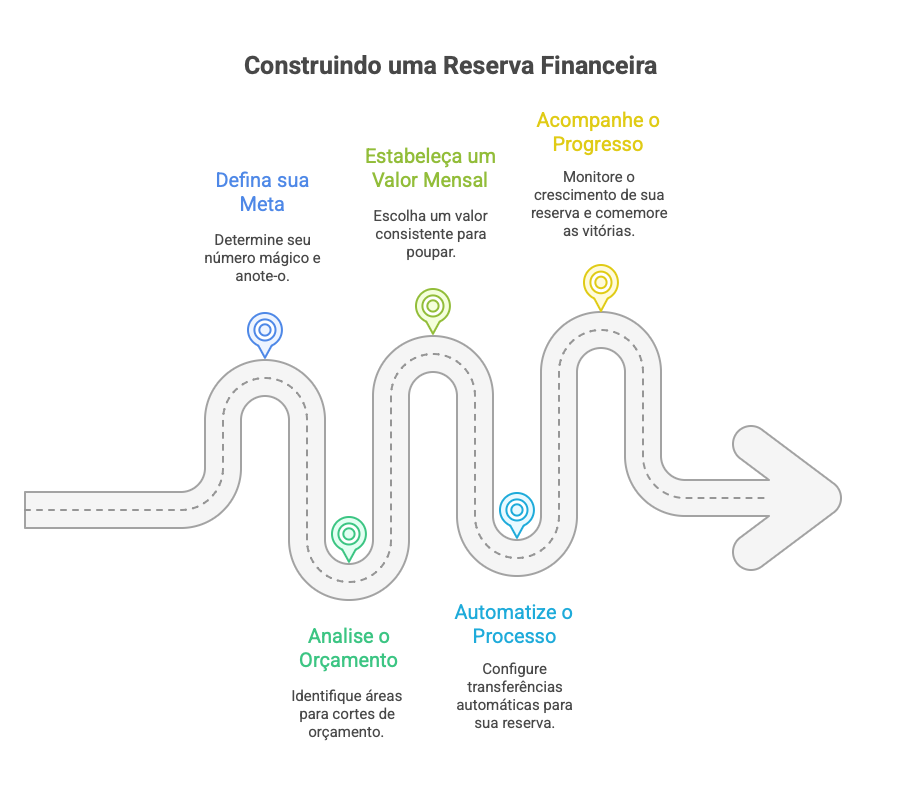
Step-by-Step to Start TODAY (Even with Little Money)
Enough theory. Let's get practical.
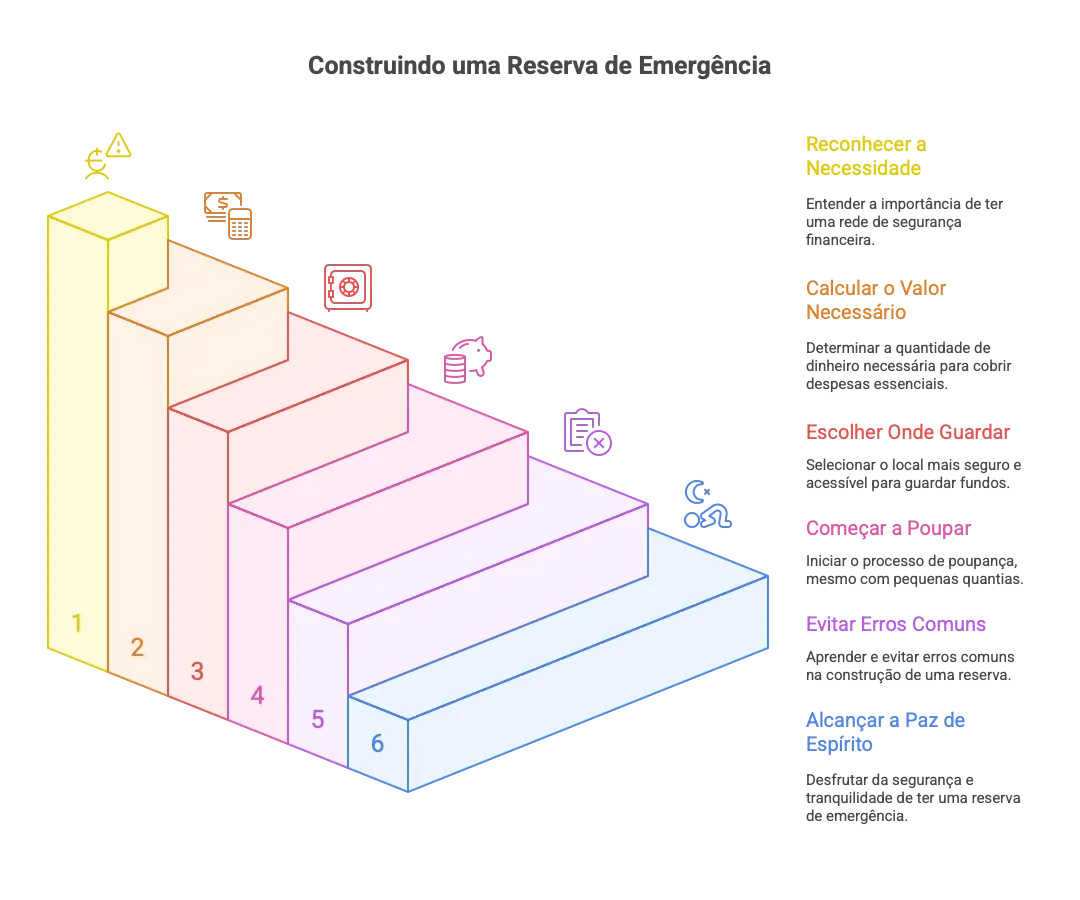
- Define your goal: Use the calculation from the previous section to find your magic number. Write it down!
- Analyze your budget: See where your money is going and identify small cuts. That streaming service you never use? The phone plan that could be reduced? Every dollar counts.
- Set a monthly amount: It does not matter if it is $50 or $500. The habit is more important than the amount at the beginning. Set an amount you can reliably save every month without fail.
- Automate the process: As soon as you receive your paycheck, the first thing to do is transfer the defined amount to your emergency fund investment. Build the habit of "paying yourself first."
- Track your progress: Watching your fund grow, even slowly, is one of the greatest motivating factors. Celebrate every small victory!
The Most Common Mistakes When Building Your Fund (and How to Avoid Them)
Watch out for these traps that can sabotage all your effort:
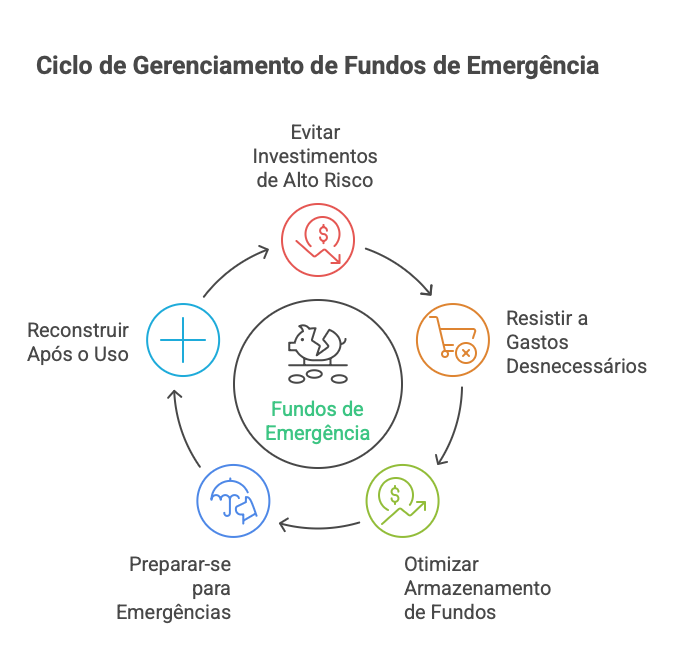
- Mistake 1: Investing the fund in risky assets. Stocks, real estate funds, and cryptocurrencies are NOT places for your emergency fund. The goal is to have the money available and without losses when the unexpected arrives.
- Mistake 2: Using the money for "false emergencies." A TV sale, Black Friday deals, or a vacation trip are not emergencies. Stay disciplined and use the fund only for its original purpose.
- Mistake 3: Leaving the money sitting in a checking account. There, it mixes with daily expenses and earns nothing meaningful. It is important to keep the fund separate and growing.
- Mistake 4: Thinking you will never need to use it. Accept that unexpected events happen to everyone. Being prepared is not pessimism — it is financial intelligence. And if you do use it, do not get discouraged — afterward, start rebuilding.
Conclusion: Your Journey Starts Now
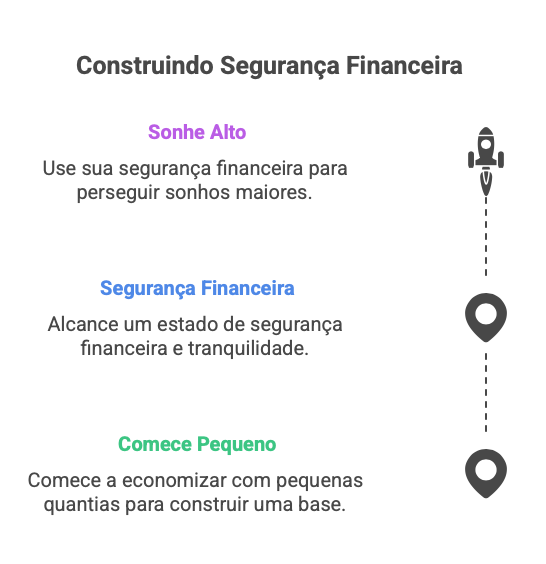
Building an emergency fund is not the most glamorous part of personal finance, but it is, without a doubt, the most transformative. It is the foundation that will give you the security and confidence to dream bigger: invest for retirement, plan a home purchase, or take that dream trip.
Do not postpone your peace of mind any longer. Open your banking app right now, see how much you can transfer, and take the first step. Whether it is $10, $50, or $200 — your future self will be enormously grateful.